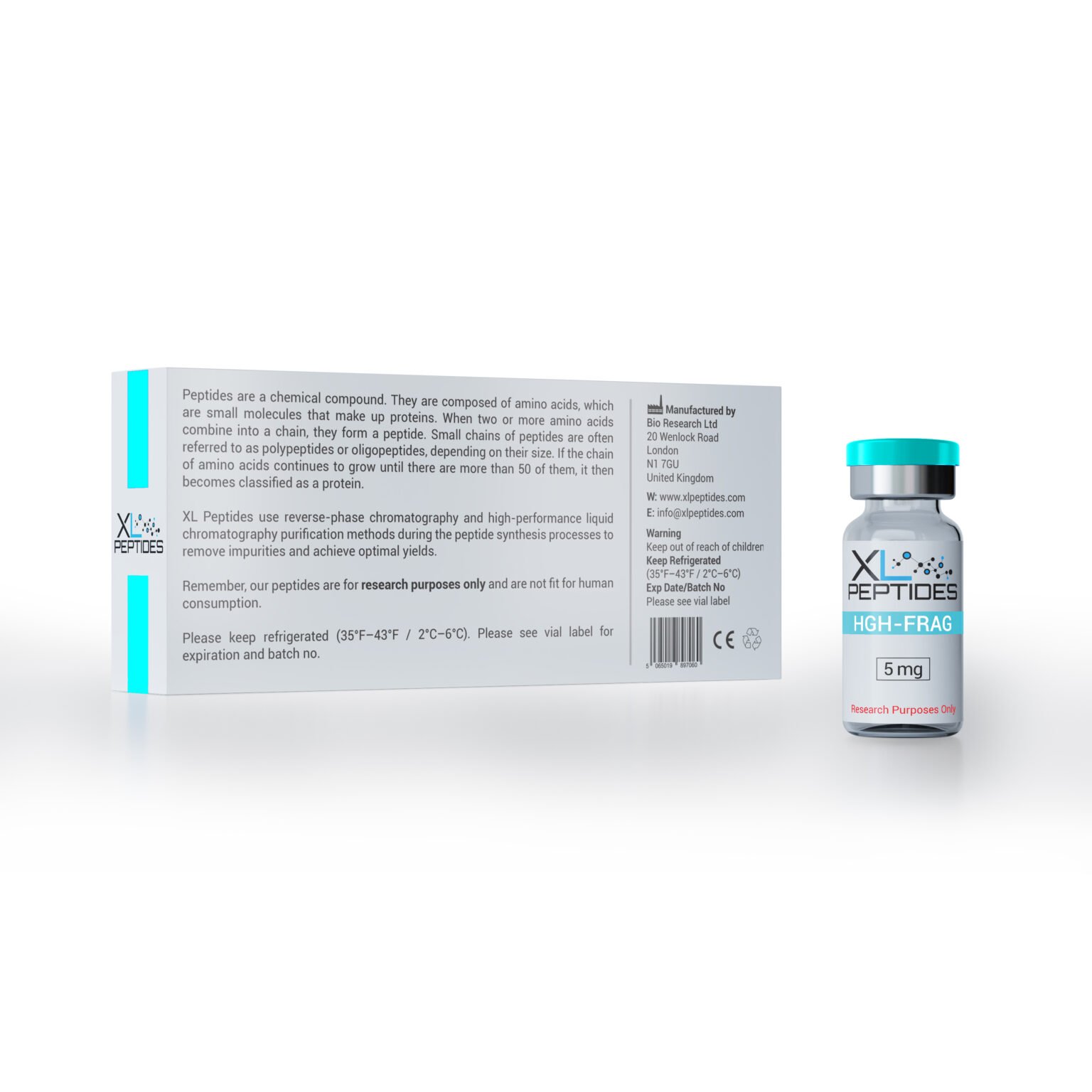
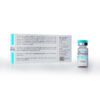
HGH Fragment 176-191 — Research Peptide Product Description
HGH Fragment 176-191 is a research peptide derived from the C-terminal region of human growth hormone (HGH). This peptide sequence has attracted interest in laboratory research because of its relationship to mechanisms associated with growth hormone biology and lipid metabolism. Consequently, HGH Fragment 176-191 is frequently discussed in peptide-research settings focused on metabolic pathways, cellular signaling, and related biological processes.
This research peptide is supplied for research purposes only and is not intended for human or veterinary use. It should be handled exclusively by appropriately qualified researchers working within applicable laboratory, institutional, and regulatory requirements.
What Is HGH Fragment 176-191?
HGH Fragment 176-191 refers to a specific peptide sequence corresponding to amino acids 176 through 191 of human growth hormone. Unlike complete human growth hormone, this fragment represents only a small portion of the larger protein structure. Therefore, researchers can investigate the fragment independently when studying the biological activity associated with this region of the HGH molecule.
The interest surrounding HGH Fragment 176-191 comes largely from research into the relationship between growth hormone and lipid metabolism. In particular, scientific investigations have examined whether portions of the HGH molecule can influence metabolic pathways independently of the complete hormone.
Because peptide research remains an evolving field, individual experimental findings should be interpreted carefully. Results observed in laboratory models should not automatically be considered evidence of equivalent effects in humans. Furthermore, research peptides should not be presented as approved treatments, dietary supplements, or substitutes for clinically validated medications.
HGH Fragment 176-191 for Research
HGH Fragment 176-191 may be investigated in laboratory environments examining peptide structure, biological signaling, and metabolic pathways. Researchers may also use peptide fragments to better understand how specific regions of larger proteins contribute to biological activity.
Additionally, studying isolated peptide sequences can provide a useful way to explore structure-function relationships. Rather than examining an entire protein at once, researchers can focus on a defined sequence and evaluate its behavior under controlled experimental conditions.
For this reason,HGH fragment 176-191 can be relevant to research involving:
• Peptide structure and characterization
• Growth hormone-related molecular pathways
• Lipid and metabolic research
• Cellular signaling investigations
• Structure-function studies
• In-vitro experimental models
• Comparative peptide research
• Analytical and biochemical research
However, the appropriate application depends on the research protocol, experimental design, and laboratory objectives.
Key Research Characteristics
HGH Fragment 176-191 is a relatively short peptide sequence derived from human growth hormone. As a result, it provides researchers with a defined molecular target for experimental investigation.
Moreover, its relationship to HGH makes it particularly interesting for researchers studying how specific portions of larger peptide hormones may interact with biological systems. The fragment can therefore be examined independently from full-length HGH.
Another important characteristic is its defined sequence. Consistent peptide identity and analytical characterization are essential when researchers compare experimental results across different studies or laboratory conditions.
For that reason, researchers should consider documentation such as analytical testing, peptide identity, purity information, storage requirements, and lot-specific documentation when evaluating a research peptide.
Why Researchers Study HGH Fragment 176-191
Growth hormone participates in numerous biological processes, including pathways associated with growth, metabolism, and energy regulation. Consequently, researchers have explored different regions of the hormone to determine whether individual sequences contribute to particular biological activities.
HGH Fragment 176-191 is especially relevant to investigations involving metabolic signaling. However, the scientific significance of any observed activity depends on the experimental model and conditions under which it is measured.
Furthermore, separating a peptide fragment from the complete hormone allows researchers to investigate individual molecular characteristics without treating the entire HGH molecule as a single functional unit.
This approach can be valuable in basic peptide research. For example, researchers can investigate molecular interactions, compare peptide fragments, evaluate structural characteristics, and examine responses in controlled laboratory systems.
Research Applications
HGH Fragment 176-191 can be incorporated into research programs where a defined HGH-derived peptide sequence is required. Depending on the laboratory protocol, researchers may investigate the compound through biochemical assays, analytical characterization, or controlled cellular experiments.
For instance, researchers studying metabolic signaling may examine how an HGH-derived peptide behaves within a specific experimental model. Similarly, peptide scientists may use the fragment when comparing different sequences derived from larger protein hormones.
In addition, analytical laboratories can examine peptide characteristics using appropriate laboratory instrumentation and validated procedures.
Importantly, the research application should always be determined by qualified professionals. Experimental conditions, concentrations, assay design, and handling procedures should be established according to the specific research protocol rather than generalized consumer-use recommendations.
Product Quality and Characterization
Quality is particularly important when working with research peptides. Even small differences in peptide identity, purity, formulation, or storage can affect experimental consistency.
Therefore, researchers should evaluate available documentation before incorporating HGH Fragment 176-191 into laboratory work. Depending on the supplier and product, relevant documentation may include analytical reports, purity testing, molecular information, and lot-specific records.
High-quality documentation helps researchers establish traceability and supports reproducible experimental work. Likewise, clearly identified product specifications make it easier to compare results across experiments.
Researchers should also follow the supplier’s documented storage and handling requirements. Peptides can be sensitive to environmental conditions, so appropriate laboratory practices should always be followed.
HGH Fragment 176-191 and Scientific Research
The broader scientific interest in HGH-derived peptides reflects an ongoing effort to understand how protein structure relates to biological function. Instead of viewing hormones only as complete molecules, researchers can examine individual sequences to investigate specific molecular characteristics.
As a result, peptide fragments have become useful research tools across several areas of biochemical science. HGH Fragment 176-191 fits within this broader research landscape as a defined sequence derived from human growth hormone.
Nevertheless, scientific interpretation requires context. An observation in an in-vitro experiment does not necessarily predict an outcome in an animal model or human clinical setting. Likewise, findings from one experimental system may not apply to another.
Accordingly, researchers should rely on peer-reviewed literature, validated analytical methods, and appropriate experimental controls when interpreting findings related to HGH Fragment 176-191.
Research-Only Product
HGH Fragment 176-191 is intended strictly for laboratory research. It is not intended to diagnose, treat, cure, or prevent any disease or medical condition.
It should not be marketed or represented as a human-use medication, weight-loss product, performance-enhancing product, or therapeutic treatment. Furthermore, it should not be administered to humans or animals outside an appropriately authorized research framework.
Researchers are responsible for ensuring that their use of the product complies with applicable laws, regulations, institutional policies, and laboratory safety procedures.
Handling and Storage
Proper handling is an important component of peptide research. Researchers should consult the product-specific documentation supplied with their material and maintain appropriate laboratory conditions throughout storage and experimentation.
Additionally, unnecessary exposure to environmental conditions should be avoided. Researchers should use established laboratory procedures for handling peptide materials and should document relevant conditions whenever required by their experimental protocol.
Because storage requirements can vary depending on formulation and supplier specifications, researchers should always follow the instructions associated with the specific product lot rather than relying on generalized recommendations found elsewhere.
Frequently Asked Questions
What is HGH Fragment 176-191?
HGH Fragment 176-191 is a peptide sequence corresponding to amino acids 176 through 191 of human growth hormone. It is studied in laboratory research involving peptide biology, metabolic pathways, and molecular signaling.
Is HGH Fragment 176-191 the same as human growth hormone?
No. HGH Fragment 176-191 represents only a specific portion of the human growth hormone sequence. Full-length HGH is a substantially larger protein hormone with a different molecular structure.
What is HGH Fragment 176-191 used for?
It is used as a research material in laboratory investigations. Potential research areas include peptide characterization, molecular biology, metabolic research, and studies involving growth-hormone-related pathways.
Is HGH Fragment 176-191 approved for human use?
Research-grade HGH Fragment 176-191 should not be represented as an approved human medication. Products designated for research purposes are intended for qualified laboratory research rather than human administration.
Can HGH Fragment 176-191 be used as a weight-loss treatment?
A research peptide should not be marketed as a weight-loss treatment. Laboratory findings do not establish that a research product is safe or effective for treating obesity or producing weight loss in humans.
How should HGH Fragment 176-191 be handled?
Handling should follow the supplier’s product documentation and the research laboratory’s established safety procedures. Researchers should also follow applicable institutional and regulatory requirements.
Choose HGH Fragment 176-191 for Your Research
HGH Fragment 176-191 provides researchers with access to a defined peptide sequence derived from human growth hormone. Its molecular relationship to HGH makes it a relevant material for investigations involving peptide structure, metabolic pathways, cellular signaling, and related areas of biochemical research.
Furthermore, its defined sequence can support controlled experimental designs in which researchers want to investigate a specific region of the larger HGH molecule. By studying individual peptide sequences, researchers can develop a more detailed understanding of molecular structure and biological activity.
Ultimately, reliable research depends on appropriate experimental design, accurate characterization, careful handling, and responsible interpretation of results. HGH Fragment 176-191 should therefore be treated as a research material rather than a consumer health product.
For laboratories investigating HGH-derived peptide sequences, metabolic research, or peptide structure-function relationships, HGH Fragment 176-191 can serve as a defined research compound within an appropriately controlled experimental environment.
SEO keywords: HGH Fragment 176-191, HGH Fragment 176-191 peptide, HGH Fragment research peptide, growth hormone fragment, HGH peptide research, peptide research, research peptides, HGH-derived peptide, metabolic research peptide, peptide laboratory research.
| Weight | 2mg 10vials, 5mg 10vials, 10mg 10vials |
|---|
Be the first to review “HGH-Frag 176-191 5mg”
Related products
PEPTIDES
PEPTIDES
PEPTIDES
PEPTIDES
PEPTIDES

PEPTIDES
PEPTIDES
PEPTIDES
Reviews
There are no reviews yet.