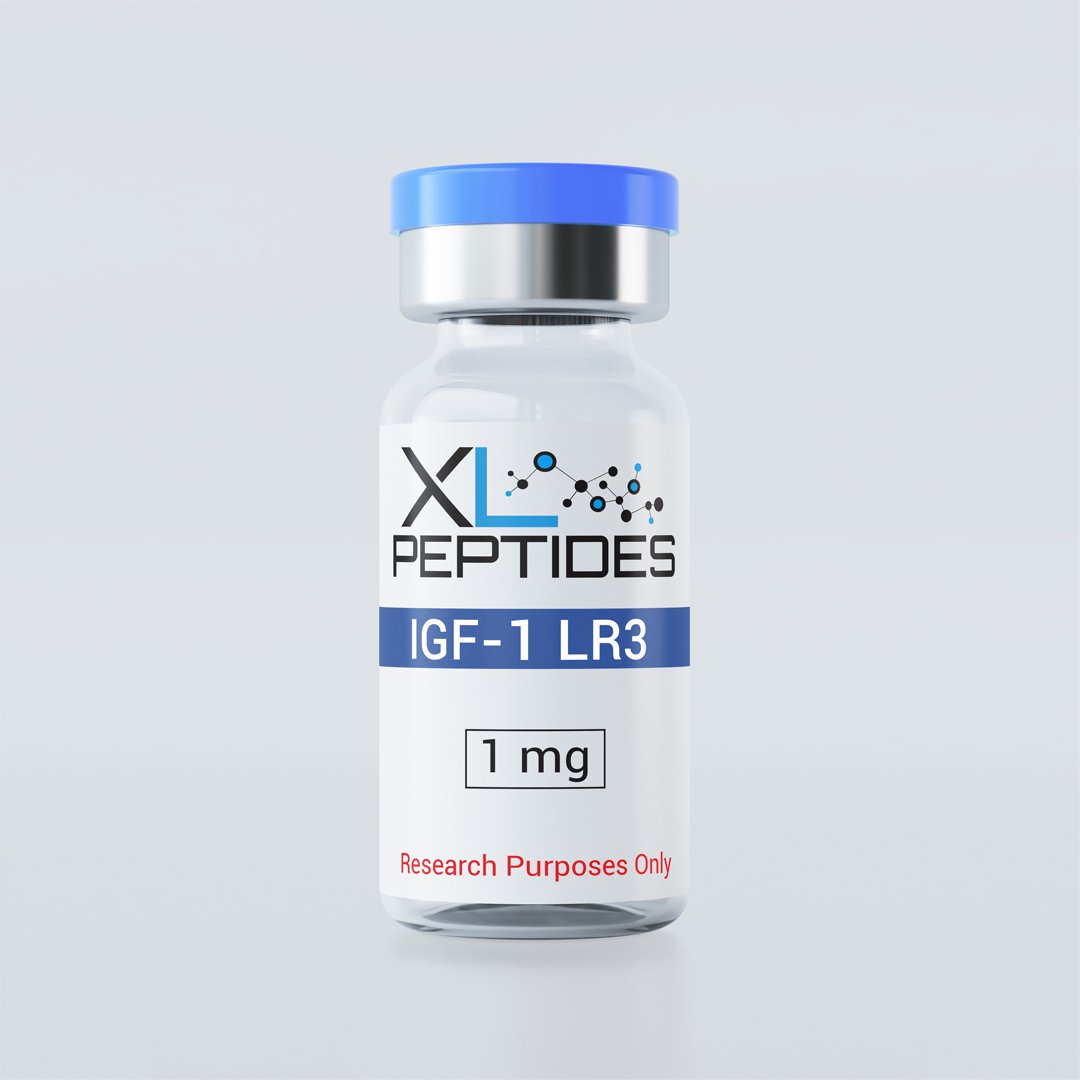
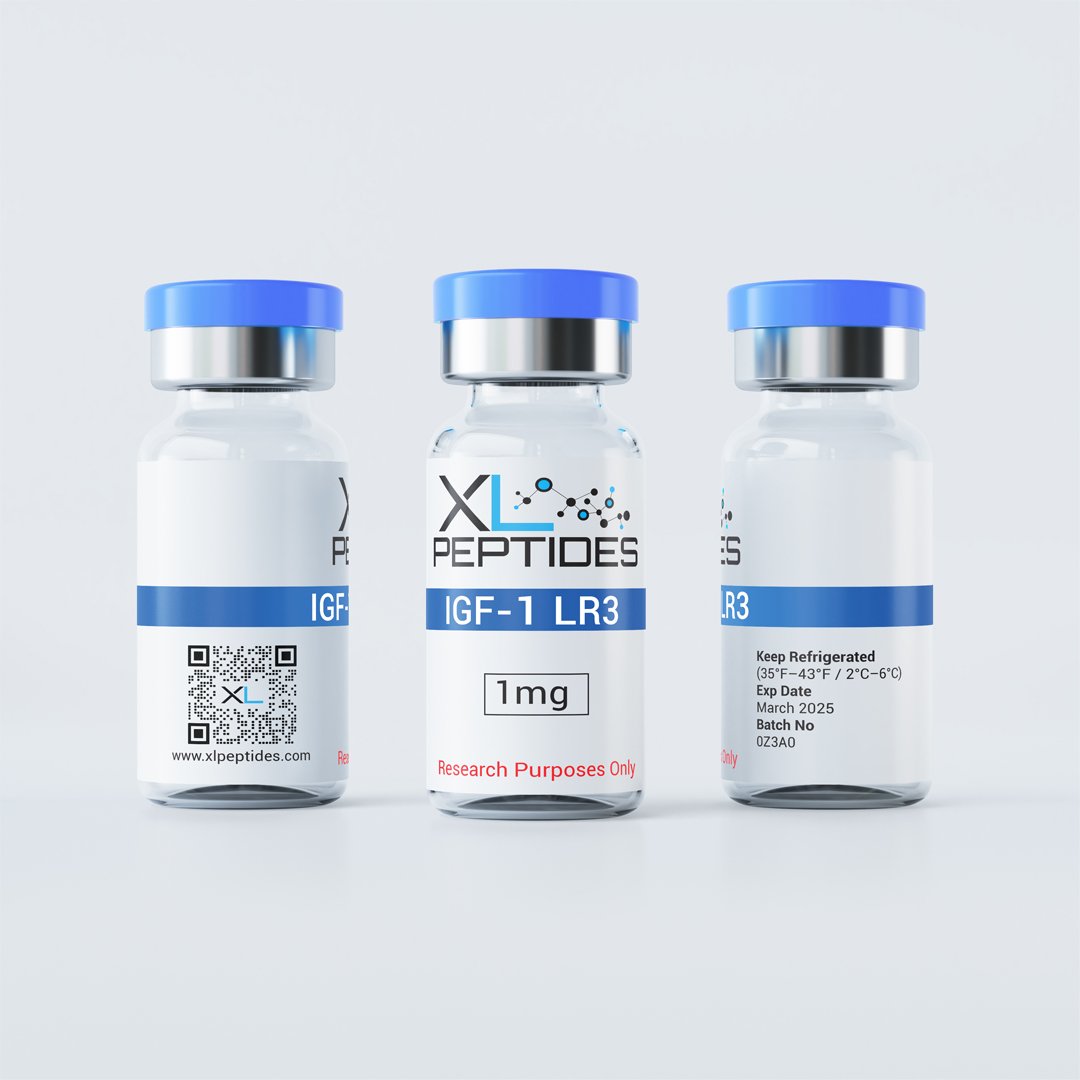
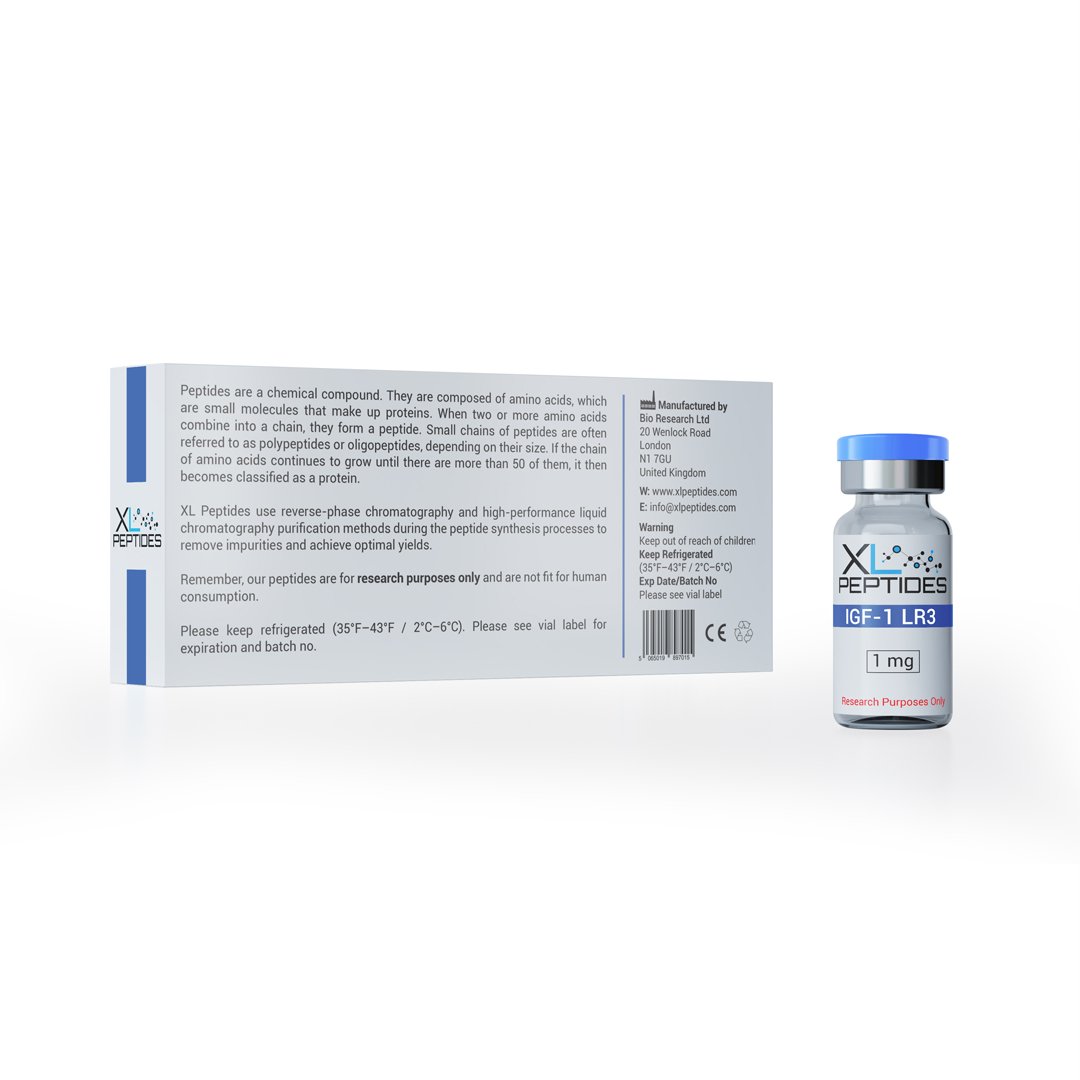
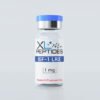
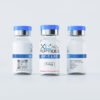
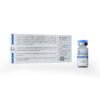
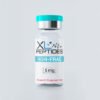
IGF-1 LR3 Research Peptide – Research-Grade Laboratory Material
IGF-1 LR3 is a modified form of insulin-like growth factor-1 (IGF-1) that researchers investigate in laboratory studies involving growth-factor signaling, cellular processes, peptide biology, and related biochemical pathways. Because its extended structure differs from native IGF-1, IGF-1 LR3 has attracted interest in controlled research environments where scientists examine receptor interactions and downstream biological mechanisms.
This product is intended strictly for laboratory research and analytical purposes. It is not intended for human or veterinary consumption, medical treatment, diagnosis, nutritional supplementation, or performance enhancement. Researchers should review applicable regulations, laboratory protocols, and supplier documentation before purchasing or handling this material.
What Is IGF-1 LR3?
IGF-1 LR3 is a synthetic peptide derived from insulin-like growth factor-1. The designation “LR3” refers to structural modifications made to the native IGF-1 molecule. In particular, the modified peptide contains an extended sequence and an alteration within the IGF-1 structure.
These molecular changes make IGF-1 LR3 an interesting subject for experimental research. Consequently, researchers can use the compound when investigating questions involving peptide structure, receptor signaling, and cellular responses.
However, laboratory interest should not be confused with established clinical use. Research findings involving IGF-1 LR3 may vary according to the experimental model, concentration, assay methodology, and research conditions. Therefore, scientists should interpret experimental results within the specific context of their study.
IGF-1 LR3 for Research
Researchers study IGF-1 LR3 as part of broader investigations into insulin-like growth factor signaling. The IGF signaling system participates in complex biological processes, which makes it relevant to many areas of molecular and cellular research.
For example, researchers may investigate receptor-mediated signaling, peptide-receptor interactions, and downstream cellular pathways. Furthermore, controlled laboratory experiments can help scientists compare different experimental conditions and examine how changes in signaling influence cellular models.
Because research objectives differ, laboratories should establish their own validated experimental protocols. Online descriptions should not replace peer-reviewed methodology, institutional procedures, or professional laboratory guidance.
Why Study IGF-1 Signaling?
IGF-1 signaling represents an important area of biological research because growth factors participate in communication between cells and regulate numerous cellular processes. Researchers therefore examine IGF-related pathways to better understand molecular signaling and cellular regulation.
Moreover, studying modified peptides can provide researchers with useful models for exploring how structural changes influence molecular behavior. IGF-1 LR3 is relevant in this context because its structure differs from native IGF-1.
However, experimental relevance does not automatically establish a therapeutic application. Researchers should distinguish carefully between laboratory observations, preclinical findings, and evidence generated through appropriately designed clinical research.
Key Features of IGF-1 LR3 Research Material
When laboratories purchase peptide research materials, product identity and documentation are important considerations. Accordingly, researchers should evaluate the available specifications before selecting a supplier.
Depending on the supplier and batch, researchers may look for:
- Clearly identified IGF-1 LR3 product information
- Stated purity specification
- Batch or lot identification
- Certificate of Analysis (COA), where available
- Appropriate analytical documentation
- Clearly labeled packaging
- Storage information
- Research-use-only designation
- Supplier quality information
These characteristics can help laboratories maintain consistency and improve material traceability. In addition, appropriate documentation can simplify internal purchasing and inventory procedures.
IGF-1 LR3 Purity
Purity represents an important consideration when purchasing research peptides. Impurities or degradation products can potentially interfere with analytical procedures, particularly in sensitive laboratory assays.
Therefore, researchers should review the purity specification and supporting analytical documentation provided for the relevant batch. A COA can offer useful information about reported purity and other batch-specific characteristics.
Nevertheless, purity should not be considered in isolation. Researchers may also evaluate analytical methodology, batch traceability, packaging, storage conditions, and supplier transparency.
For laboratories conducting reproducible research, consistent documentation can be just as important as the headline purity percentage. Consequently, a structured purchasing process can help researchers select materials that align with their experimental requirements.
IGF-1 LR3 COA and Testing Documentation
A Certificate of Analysis provides batch-specific information about a research product when supplied by the manufacturer or vendor. Researchers can use this documentation as part of their material qualification process.
Before ordering IGF-1 LR3, laboratories should determine whether a current COA is available and what information it contains. Depending on the supplier, documentation may include product identification, lot number, purity results, testing information, and other specifications.
Additionally, laboratories with specific analytical requirements should confirm those requirements with the supplier before purchasing. This approach reduces uncertainty and supports better experimental planning.
A COA should also be evaluated alongside other supplier information. Although analytical documentation can be valuable, researchers remain responsible for determining whether a material meets the standards required for their particular study.
Choosing an IGF-1 LR3 Supplier
Selecting a research-peptide supplier requires more than comparing advertised prices. Instead, laboratories should consider product information, analytical documentation, packaging, communication, and traceability.
First, confirm that the supplier clearly identifies the material as IGF-1 LR3. Next, review the stated purity and determine whether batch-specific documentation is available.
Furthermore, check whether storage and handling information is provided clearly. Reliable documentation can make laboratory procurement more efficient and can support accurate material records.
Price remains relevant, particularly for laboratories operating under strict research budgets. However, the cheapest product is not necessarily the most appropriate option. Researchers should compare specifications, documentation, packaging, and supplier reliability before making a purchasing decision.
Buying IGF-1 LR3 for Laboratory Research
Researchers searching for buy IGF-1 LR3, IGF-1 LR3 for sale, or IGF-1 LR3 supplier should prioritize vendors that provide transparent product information and clearly state the intended research use.
Before placing an order, verify the product identity, quantity, purity specification, available COA, packaging, storage information, and applicable purchasing requirements. In addition, researchers should confirm that the material can legally be purchased and used for their intended research purpose in their jurisdiction.
For laboratories with recurring research requirements, IGF-1 LR3 bulk or wholesale purchasing may be an option. Nevertheless, laboratories should purchase quantities according to legitimate research needs and their ability to store the material appropriately.
Researchers should also be cautious of websites that make exaggerated claims about human benefits or guaranteed biological outcomes. Clear research-use labeling and transparent product documentation provide a more appropriate foundation for laboratory procurement.
Laboratory Storage and Handling
Research peptides require appropriate storage and handling according to their specific product documentation. Conditions can vary depending on formulation, packaging, manufacturer instructions, and other factors.
Consequently, researchers should consult the supplier’s documentation before storing IGF-1 LR3. Laboratories should also maintain appropriate inventory records and ensure that containers remain properly labeled.
Personnel should follow their institution’s chemical and laboratory safety procedures when handling research materials. Furthermore, researchers should consult available Safety Data Sheet (SDS) information and conduct an appropriate risk assessment before beginning laboratory work.
Because research materials can be sensitive to environmental conditions, laboratories should follow the supplier’s stated storage recommendations rather than relying on generic assumptions.
Potential Research Areas
IGF-1 LR3 may be investigated in laboratory research involving growth-factor biology, peptide interactions, receptor signaling, and cellular pathways. The precise application depends on the research question and experimental model.
For instance, researchers may examine molecular signaling events or compare peptide behavior under controlled experimental conditions. Similarly, researchers can use appropriate assays to investigate specific biological mechanisms.
However, researchers should determine experimental concentrations, controls, exposure conditions, and analytical methods through validated protocols and relevant scientific literature. A commercial product description cannot substitute for experimental design or professional laboratory judgment.
Research-Only Use
IGF-1 LR3 sold as a research peptide should be used exclusively for legitimate laboratory research and analytical applications. It should not be presented as a medicine, dietary supplement, or approved treatment.
Likewise, research-grade peptide material should not be used for personal administration. Materials intended for laboratory research may be manufactured, tested, packaged, and labeled under requirements that differ from those applicable to products intended for human use.
Therefore, laboratories should restrict access to appropriately trained personnel and follow their institutional procedures for handling, storage, documentation, and disposal.
Frequently Asked Questions
What is IGF-1 LR3?
IGF-1 LR3 is a modified synthetic form of insulin-like growth factor-1 studied in laboratory research. Its structural differences from native IGF-1 make it relevant to experimental investigations involving peptide biology and growth-factor signaling.
Is IGF-1 LR3 for human use?
No. Research-grade IGF-1 LR3 should be treated as a laboratory research material and is not intended for human or veterinary consumption, self-administration, medical treatment, or supplementation.
What should I look for when buying IGF-1 LR3?
Researchers should evaluate product identity, purity specifications, batch information, COA availability, analytical documentation, packaging, storage instructions, supplier transparency, and applicable regulatory requirements.
Does IGF-1 LR3 come with a COA?
COA availability depends on the supplier and product batch. Researchers should confirm whether batch-specific documentation is available before purchasing.
Can I purchase IGF-1 LR3 in bulk?
Some research suppliers may offer different quantities, including larger research quantities. Laboratories should select an appropriate quantity based on legitimate research requirements and suitable storage capacity.
How should IGF-1 LR3 be stored?
Storage requirements depend on the particular product and supplier specifications. Researchers should follow the manufacturer’s or supplier’s documented storage instructions and applicable laboratory procedures.
Order IGF-1 LR3 for Research
IGF-1 LR3 provides researchers with a modified peptide model for laboratory investigations involving growth-factor signaling, peptide biology, and related molecular pathways.
When sourcing this research material, prioritize clear product identification, appropriate purity documentation, batch traceability, and transparent supplier information. Additionally, review applicable safety documentation and regulatory requirements before purchasing or handling the material.
Ultimately, responsible sourcing supports reliable laboratory research. By choosing appropriately documented research materials and maintaining consistent laboratory procedures, researchers can improve traceability and reduce uncertainty throughout their experimental workflow.
IGF-1 LR3 is intended exclusively for legitimate laboratory research and analytical purposes and is not intended for human or veterinary consumption.
| weight | 0.1mg 10vials, 1mg 10vials |
|---|
Be the first to review “IGF-1 LR3 1mg”
Related products

PEPTIDES
PEPTIDES
PEPTIDES
PEPTIDES
PEPTIDES
PEPTIDES
PEPTIDES
PEPTIDES
Reviews
There are no reviews yet.