
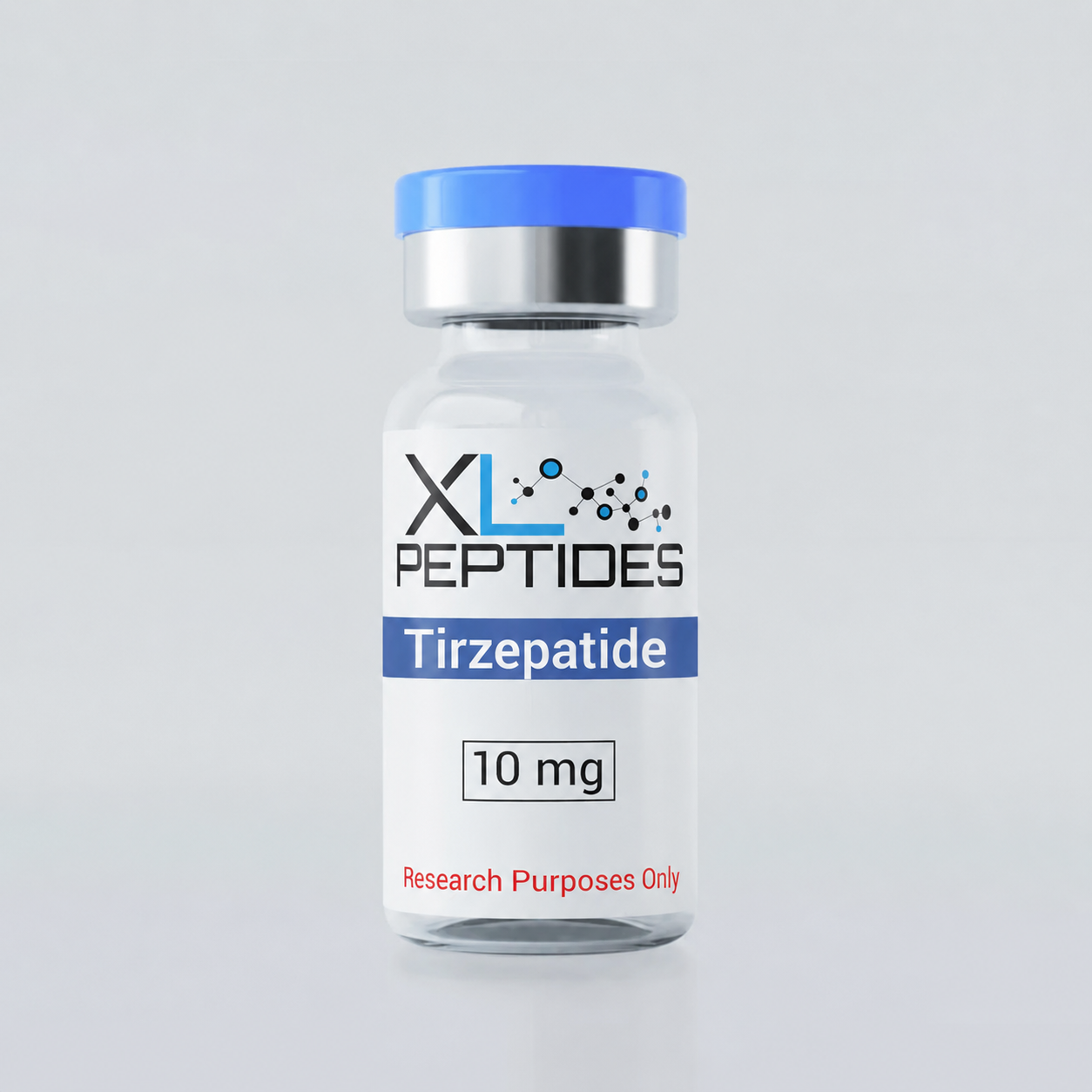
Tirzepatide 10mg
Price range: $45.00 through $280.00
Tirzepatide is a prescription medicine that has become an important subject in modern metabolic health research and clinical care. It belongs to a class of medicines that acts on two hormone receptors involved in glucose regulation and appetite: the glucose-dependent insulinotropic polypeptide (GIP) receptor and the glucagon-like peptide-1 (GLP-1) receptor.
Tirzepatide: Overview, Uses, Benefits, Safety, and Important Information
Tirzepatide is a prescription medicine that has become an important subject in modern metabolic health research and clinical care. It belongs to a class of medicines that acts on two hormone receptors involved in glucose regulation and appetite: the glucose-dependent insulinotropic polypeptide (GIP) receptor and the glucagon-like peptide-1 (GLP-1) receptor.
Unlike a conventional single-pathway GLP-1 receptor agonist, tirzepatide activates both GIP and GLP-1 receptors. This dual mechanism has made tirzepatide an important focus of clinical research involving blood glucose management, body-weight reduction, and obesity-related health conditions.
In the United States, tirzepatide is marketed under the brand names Mounjaro and Zepbound, with different approved indications. Mounjaro is indicated alongside diet and exercise to improve glycemic control in adults and certain pediatric patients with type 2 diabetes. Zepbound is indicated with a reduced-calorie diet and increased physical activity for chronic weight management in eligible adults and is also indicated for moderate-to-severe obstructive sleep apnea in adults with obesity. Lilly PI+1
Because tirzepatide is a prescription medicine, its use should be determined by a qualified healthcare professional. The appropriate product, indication, dose, and monitoring requirements depend on an individual’s medical circumstances.
What Is Tirzepatide?
Tirzepatide is a synthetic peptide-based medication designed to interact with two important metabolic hormone receptors. These receptors are associated with the body’s regulation of blood glucose, insulin secretion, appetite, and energy balance.
The medicine is administered by subcutaneous injection. Current U.S. prescribing information describes once-weekly administration, with dosage selection and escalation determined according to the approved product and clinical indication. Lilly PI+1
Tirzepatide has attracted substantial scientific interest because its dual GIP and GLP-1 receptor activity provides a different pharmacological approach from medicines that activate only the GLP-1 receptor.
However, the mechanism should not be interpreted as a guarantee of a particular outcome for every patient. Response varies, and treatment decisions should be individualized by a healthcare professional.
How Tirzepatide Works
Tirzepatide is a GIP and GLP-1 receptor agonist. These hormones are part of the body’s natural system for regulating metabolism and appetite.
After administration, tirzepatide interacts with the relevant receptors and influences several physiological processes. Its effects include glucose-dependent stimulation of insulin secretion and changes in appetite-related signaling. Tirzepatide also delays gastric emptying, which can affect how quickly food and some orally administered medicines move through the gastrointestinal system. Lilly PI+1
The dual-receptor mechanism distinguishes tirzepatide from traditional GLP-1-only therapies. Consequently, researchers have studied whether simultaneous GIP and GLP-1 receptor activation can provide meaningful metabolic effects.
For patients, however, the most important consideration is not simply the mechanism. Instead, treatment should be evaluated according to the approved indication, individual medical history, potential benefits, tolerability, and safety considerations.
Tirzepatide for Type 2 Diabetes
Mounjaro, which contains tirzepatide, is indicated in the United States as an adjunct to diet and exercise for improving glycemic control in adults and pediatric patients aged 10 years and older with type 2 diabetes. Lilly PI
Clinical research supporting the approval demonstrated improvements in measures of blood glucose control. The FDA’s clinical-trial summary reports that the original Mounjaro approval was supported by nine clinical trials involving 7,769 patients with type 2 diabetes, with efficacy assessments drawn from several of those studies. U.S. Food and Drug Administration
HbA1c is one of the principal measurements used to evaluate longer-term blood glucose control. Tirzepatide treatment has been shown to lower HbA1c in appropriate patients with type 2 diabetes.
Nevertheless, medication is only one component of diabetes management. Diet, physical activity, monitoring, other medications, and regular medical follow-up can all remain important.
Tirzepatide for Chronic Weight Management
Zepbound contains tirzepatide and is approved in the United States for chronic weight management in eligible adults.
Under current FDA labeling, Zepbound is indicated with a reduced-calorie diet and increased physical activity to reduce excess body weight and maintain weight reduction long term in adults with obesity, or in adults with overweight who have at least one weight-related medical condition. Lilly PI
The approval reflects evidence from clinical research evaluating tirzepatide in people with obesity or overweight. However, individual results can vary substantially.
A responsible description therefore avoids promising a specific amount of weight loss. Instead, it should explain that tirzepatide is a prescription treatment intended to be used as part of a broader medical weight-management strategy.
Tirzepatide and Obstructive Sleep Apnea
Current U.S. Zepbound labeling also includes an indication for treating moderate-to-severe obstructive sleep apnea in adults with obesity. Lilly PI
Obstructive sleep apnea is a condition in which breathing repeatedly becomes interrupted during sleep. Obesity can be an important risk factor, and weight reduction may play a role in managing the condition.
The inclusion of obstructive sleep apnea in current labeling represents an expansion of the clinical applications associated with tirzepatide. Nevertheless, patients should receive an appropriate medical evaluation rather than assuming that weight-management medication alone is sufficient for every sleep-related breathing disorder.
Potential Benefits of Tirzepatide
The potential benefits of tirzepatide depend on the indication for which it is prescribed.
For eligible patients with type 2 diabetes, the medicine can improve blood glucose control. For eligible adults with obesity or overweight and a qualifying weight-related condition, Zepbound can support chronic weight management when combined with dietary changes and physical activity. Current labeling also covers moderate-to-severe obstructive sleep apnea in adults with obesity. Lilly PI+1
Importantly, these are approved medical uses rather than generalized claims that tirzepatide is suitable for everyone.
The medication should therefore be considered within an individualized treatment plan. A clinician can evaluate medical history, current medications, contraindications, treatment goals, and potential risks before deciding whether tirzepatide is appropriate.
Tirzepatide Dosage Information
Tirzepatide dosage is indication-specific and should follow the prescribing information for the particular product.
Current U.S. Zepbound labeling describes a starting dose of 2.5 mg once weekly, followed by dose escalation at intervals specified in the prescribing information. Maintenance doses depend on the indication, while the maximum recommended dosage is 15 mg once weekly. Lilly PI
Mounjaro has its own prescribing instructions. The current prescribing information similarly describes a once-weekly starting regimen followed by potential dose increases based on clinical need and tolerability. Lilly PI
Patients should not independently alter their dose or combine tirzepatide with other tirzepatide-containing products. The FDA-approved prescribing information specifically states that coadministration with other tirzepatide-containing products or GLP-1 receptor agonists is not recommended. Lilly PI
Common Side Effects
Like other prescription medicines, tirzepatide can cause adverse reactions.
The most commonly reported adverse reactions with Mounjaro include nausea, diarrhea, decreased appetite, vomiting, constipation, dyspepsia, and abdominal pain. Lilly PI
The current Zepbound prescribing information lists nausea, diarrhea, vomiting, constipation, abdominal pain, dyspepsia, injection-site reactions, fatigue, hypersensitivity reactions, eructation, hair loss, and gastroesophageal reflux disease among reported adverse reactions. Lilly PI
Gastrointestinal symptoms are particularly relevant when discussing tirzepatide. Treatment should therefore be monitored by an appropriate healthcare professional, especially when symptoms are persistent, severe, or accompanied by other concerning signs.
Important Safety Information
Tirzepatide carries a boxed warning concerning thyroid C-cell tumors. In animal studies, tirzepatide caused thyroid C-cell tumors; however, it is unknown whether the same risk applies to humans. Mounjaro and Zepbound are contraindicated in people with a personal or family history of medullary thyroid carcinoma or with Multiple Endocrine Neoplasia syndrome type 2. Lilly PI+1
The prescribing information also contains warnings concerning serious gastrointestinal reactions, acute kidney injury, gallbladder disease, acute pancreatitis, hypersensitivity reactions, hypoglycemia in certain circumstances, and other clinically important issues. U.S. Food and Drug Administration+1
Additionally, tirzepatide delays gastric emptying and may affect absorption of certain oral medications. Healthcare providers should therefore be informed about all medicines and supplements a patient takes. Lilly PI+1
Pregnancy is another important consideration. Current prescribing information warns that tirzepatide may cause fetal harm and provides specific guidance for pregnancy and oral contraceptive use. Lilly PI+1
Tirzepatide and Other GLP-1 Medicines
Tirzepatide is sometimes compared with GLP-1 receptor agonists because both approaches influence metabolic pathways associated with glucose regulation and appetite.
The major pharmacological distinction is that tirzepatide activates both GIP and GLP-1 receptors, whereas traditional GLP-1 receptor agonists primarily target the GLP-1 receptor.
However, comparing medicines solely according to their mechanisms can be misleading. Differences exist in approved indications, dosing schedules, contraindications, adverse effects, clinical evidence, and patient suitability.
For that reason, a healthcare professional should determine which treatment is appropriate rather than relying on an online comparison alone.
Prescription Tirzepatide Versus “Research Peptide” Products
Online searches frequently use phrases such as “tirzepatide peptide,” “research tirzepatide,” or “research-grade tirzepatide.” These terms can create confusion because FDA-approved tirzepatide medicines are prescription products.
The FDA has specifically taken enforcement action against websites marketing products described as tirzepatide while representing them as alternatives to approved medicines. The agency has emphasized that approved Mounjaro and Zepbound products are prescription medicines. U.S. Food and Drug Administration
Therefore, consumers should distinguish carefully between an FDA-approved prescription product and an online product marketed as a “research peptide.”
A research label does not establish that a product is suitable for human use, nor does it demonstrate equivalent manufacturing quality, sterility, stability, potency, or clinical safety.
Storage and Handling
Prescription tirzepatide products have specific storage and handling requirements. Patients should follow the instructions supplied with their prescribed product and consult their pharmacist or healthcare professional when questions arise.
Storage requirements can differ according to the particular formulation and presentation. Consequently, generalized internet instructions should not replace the official prescribing information or product-specific instructions.
Patients should also avoid sharing injectable medicines with another person. Current Zepbound labeling specifically addresses the safe use of its injection devices and emphasizes that certain presentations are intended for individual patient use. Lilly PI
Who Should Consider Tirzepatide?
Tirzepatide may be appropriate for certain patients with type 2 diabetes, obesity, overweight accompanied by qualifying weight-related conditions, or obesity-associated moderate-to-severe obstructive sleep apnea, depending on the product and applicable indication. Lilly PI+1
However, eligibility cannot be determined from a product description alone.
A healthcare professional should consider factors such as medical history, current medications, contraindications, previous treatment, pregnancy status, and individual treatment goals.
This individualized approach is particularly important because a medicine that is appropriate for one person may not be appropriate for another.
Why Medical Supervision Matters
Tirzepatide affects several physiological systems. As a result, treatment decisions should not be based solely on desired weight or blood glucose outcomes.
Medical supervision allows healthcare professionals to evaluate treatment response, monitor adverse reactions, review other medications, and make appropriate changes when necessary.
Furthermore, patients may require different treatment strategies over time. Regular follow-up provides an opportunity to assess whether the medicine remains appropriate and whether additional medical or lifestyle interventions are needed.
Frequently Asked Questions About Tirzepatide
Is tirzepatide a peptide?
Yes. Tirzepatide is a peptide-based medicine engineered to activate GIP and GLP-1 receptors.
What is tirzepatide used for?
In the United States, tirzepatide is marketed as Mounjaro for improving glycemic control in type 2 diabetes. It is marketed as Zepbound for chronic weight management in eligible adults and for moderate-to-severe obstructive sleep apnea in adults with obesity. Lilly PI+1
Is tirzepatide the same as Mounjaro?
Mounjaro is a brand name for a tirzepatide product. Zepbound is another tirzepatide brand with different FDA-approved indications.
Is tirzepatide the same as a GLP-1 drug?
Not exactly. Tirzepatide activates both GIP and GLP-1 receptors, whereas conventional GLP-1 receptor agonists primarily activate the GLP-1 receptor.
Does tirzepatide require a prescription?
In the United States, FDA-approved Mounjaro and Zepbound are prescription medicines. U.S. Food and Drug Administration
Can everyone use tirzepatide for weight loss?
No. FDA-approved weight-management use has specific eligibility criteria, and a healthcare professional should determine whether treatment is appropriate. Lilly PI
What are the most common side effects?
Gastrointestinal reactions such as nausea, diarrhea, vomiting, constipation, dyspepsia, and abdominal pain are among the commonly reported adverse reactions. Lilly PI+1
Final Considerations
Tirzepatide represents an important development in metabolic medicine. Its dual GIP and GLP-1 receptor activity distinguishes it from many earlier treatments, while extensive clinical research has established important roles for tirzepatide in diabetes management and chronic weight management.
Current U.S. labeling also recognizes Zepbound for moderate-to-severe obstructive sleep apnea in adults with obesity. Lilly PI
At the same time, tirzepatide is not a general-purpose wellness product or an ordinary supplement. It is a prescription medicine with specific indications, contraindications, warnings, adverse effects, and administration requirements.
Consumers researching tirzepatide should therefore prioritize authoritative prescribing information and qualified medical advice. Online descriptions can explain the medication and its scientific background, but they should not replace an individualized medical assessment.
For SEO purposes, accurate content should naturally incorporate terms such as tirzepatide peptide, tirzepatide medication, tirzepatide uses, tirzepatide benefits, tirzepatide side effects, tirzepatide safety, Mounjaro, Zepbound, tirzepatide for type 2 diabetes, tirzepatide for weight management, and tirzepatide clinical research.
Most importantly, those keywords should support accurate educational content rather than imply that tirzepatide is appropriate for everyone or that a specific outcome is guaranteed.
Medical disclaimer: This content is for general educational purposes and does not constitute medical advice, diagnosis, or a recommendation to use tirzepatide. Tirzepatide is a prescription medicine. Consult a qualified healthcare professional and the current official prescribing information before making decisions about treatment.
:::
Sources
| Weight | 5mg 10vials, 10mg 10vials, 15mg 10vials, 20mg 10vials, 30mg 10vials, 40mg 10vials, 50mg 10vials, 60mg 10vials, 100mg 10vials |
|---|
Be the first to review “Tirzepatide 10mg”
Related products
PEPTIDES

PEPTIDES
PEPTIDES
PEPTIDES
PEPTIDES
PEPTIDES
PEPTIDES
PEPTIDES
Reviews
There are no reviews yet.