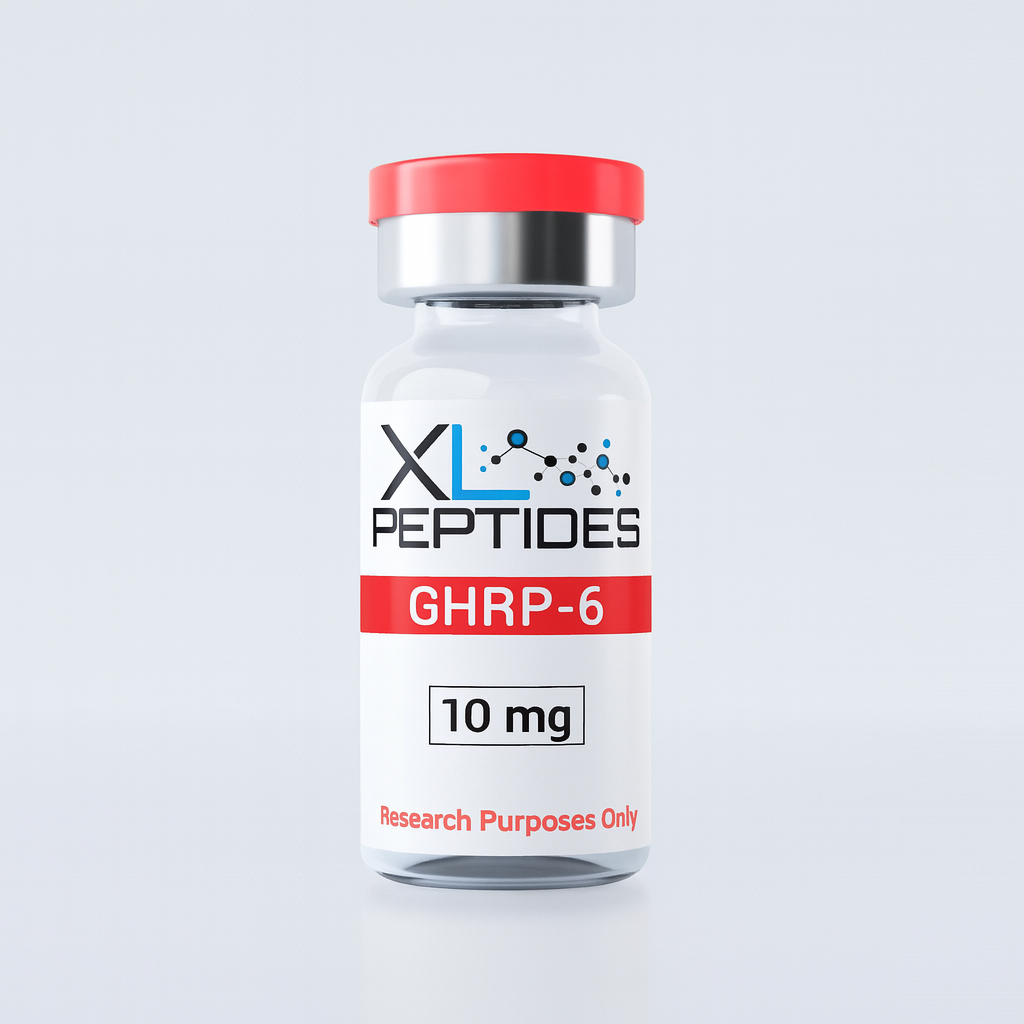
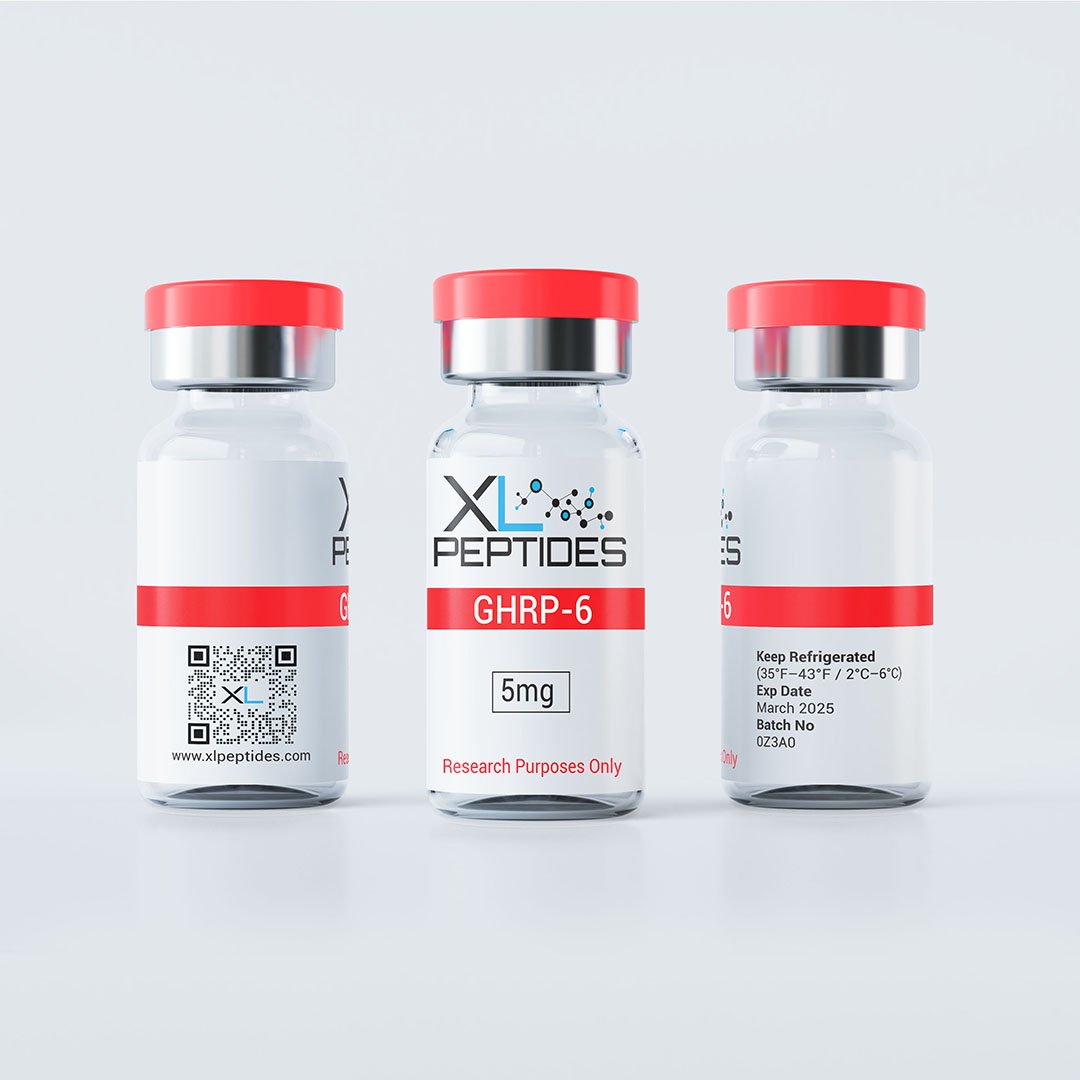
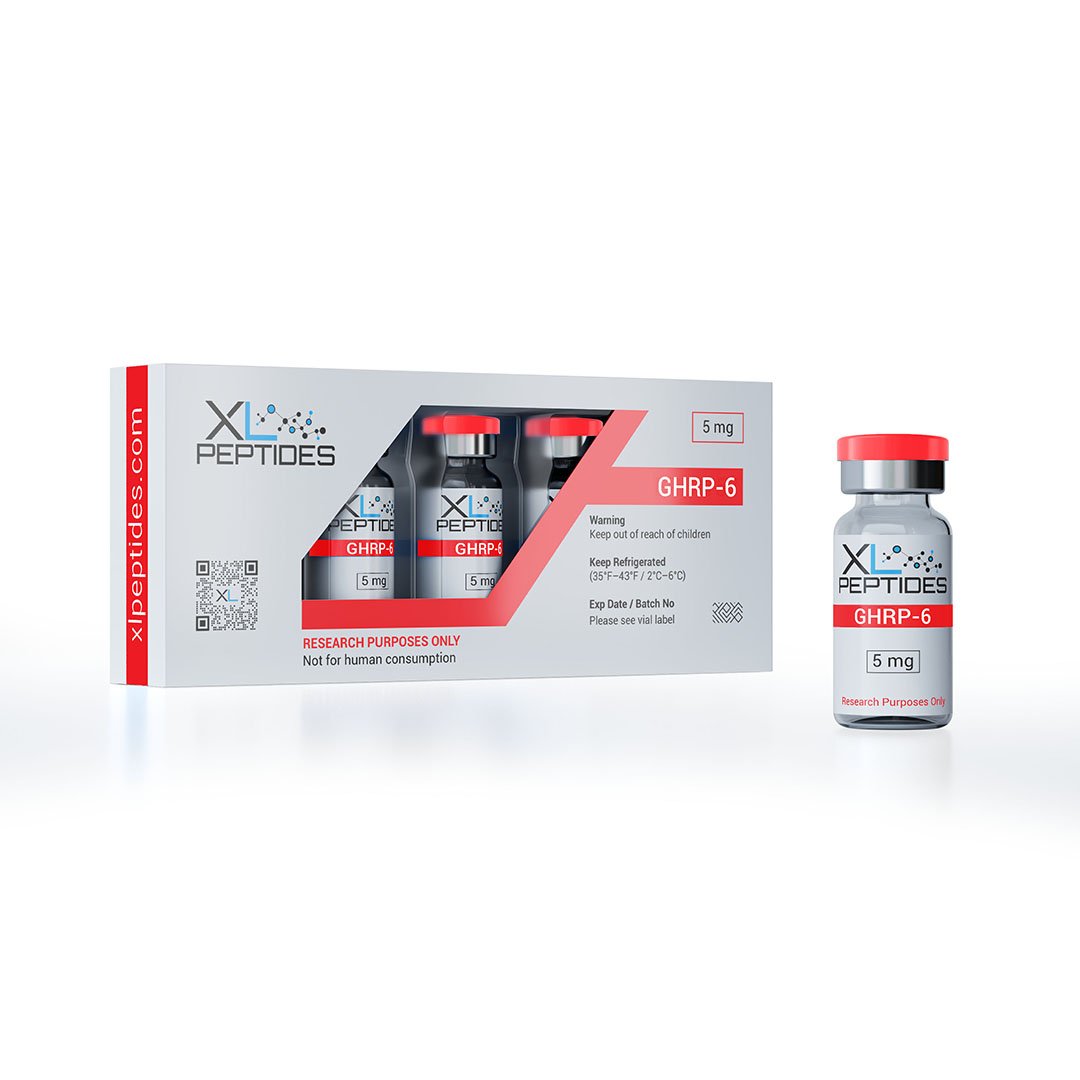
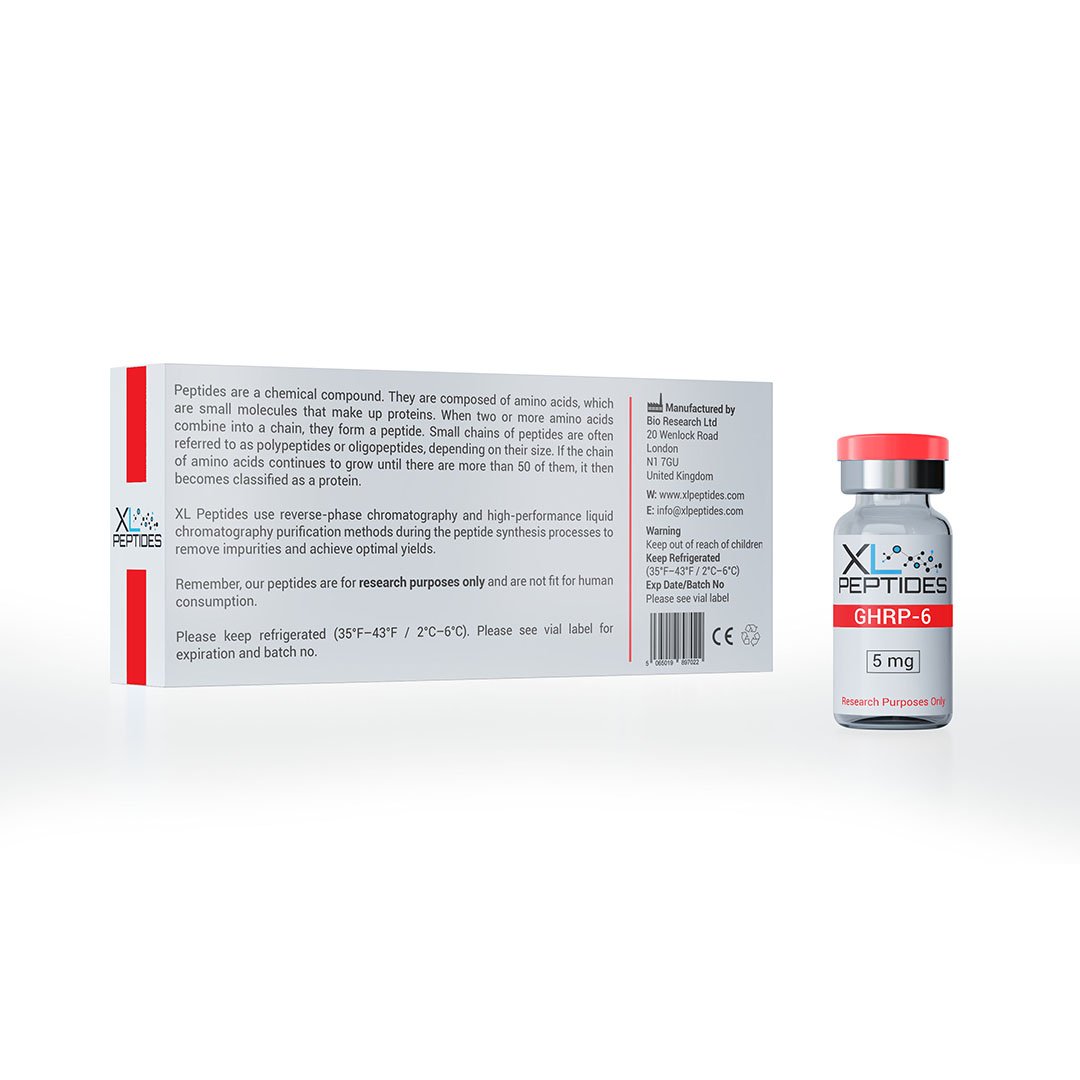
GHRP-6 is a synthetic peptide commonly discussed in biochemical and laboratory research involving peptide signaling and growth-hormone-related pathways. As a research compound, GHRP-6 is primarily of interest to researchers investigating peptide-receptor interactions, cellular signaling, endocrine mechanisms, and related experimental models. This product description provides general scientific and product information about GHRP-6 without making claims about therapeutic effectiveness or suitability for human or veterinary use. Researchers should always consult applicable laws, institutional policies, supplier documentation, and laboratory safety procedures before handling or studying any research compound. GHRP-6 stands for growth hormone-releasing peptide-6. It belongs to a class of synthetic peptides that have been studied for their interactions with biological signaling systems. Because peptide structure can influence receptor activity and downstream cellular responses, compounds such as GHRP-6 can be useful in controlled laboratory investigations. In research settings, GHRP-6 may be examined as an experimental peptide for studying signaling pathways associated with growth-hormone secretion. However, research findings should not automatically be interpreted as evidence of a medical benefit. Laboratory observations, animal studies, and human clinical outcomes represent different levels of evidence and should be evaluated separately. Furthermore, the scientific literature surrounding peptide compounds continues to develop. Consequently, researchers should rely on current primary literature, validated analytical methods, and appropriate experimental controls when designing studies involving GHRP-6. Peptide research encompasses a broad range of scientific disciplines, including biochemistry, molecular biology, pharmacology, analytical chemistry, and endocrinology. Within these fields, synthetic peptides can be used as experimental tools for investigating molecular interactions and biological mechanisms. GHRP-6 has historically been investigated in relation to growth-hormone-releasing activity. Therefore, researchers interested in endocrine signaling may encounter GHRP-6 in experimental literature concerning peptide-mediated signaling and secretory responses. Importantly, a research peptide should be treated as a laboratory material rather than as a consumer health product. Its presence in scientific literature does not establish that it has been approved for diagnosis, treatment, prevention, or mitigation of disease. The exact specifications of a GHRP-6 research material depend on the supplier, manufacturing process, formulation, and analytical testing performed on the individual batch. For this reason, researchers should review the certificate of analysis and product documentation associated with the specific material being considered. Relevant product information may include peptide identity, sequence information, molecular characteristics, purity testing, appearance, quantity, storage recommendations, and analytical results. Additionally, high-quality research documentation should clearly distinguish measured characteristics from general descriptions. For example, a stated purity percentage should be supported by an appropriate analytical method and should correspond to the specific batch whenever possible. Researchers should therefore evaluate documentation carefully rather than relying solely on general product descriptions. Analytical characterization is an important component of peptide research. Depending on the experimental objective, researchers may use techniques such as high-performance liquid chromatography and mass spectrometry to examine peptide identity and purity. HPLC can provide information about chromatographic purity, while mass spectrometry can assist with molecular-mass confirmation. Nevertheless, no single analytical measurement necessarily establishes every characteristic relevant to a research application. For that reason, laboratories should select analytical procedures according to their study design and quality requirements. Appropriate reference materials, controls, validated procedures, and documented laboratory practices can improve the reliability of experimental results. Moreover, researchers should distinguish between a supplier’s stated specification and independently generated laboratory results. Those two forms of information serve different purposes. Peptide stability can be influenced by environmental conditions such as temperature, moisture, light exposure, formulation, and repeated handling. Consequently, storage should follow the supplier’s current documentation and the laboratory’s established procedures. Before use, researchers should review the accompanying technical documentation and safety information. Handling procedures should also be selected according to the material’s physical and chemical characteristics. Because laboratory requirements vary, a single storage or handling procedure should not be assumed to apply universally. Instead, researchers should follow the instructions provided for the specific product and formulation. Appropriate laboratory controls are also important. Personnel should use suitable protective equipment and established procedures when handling research chemicals or peptides. Any material that is no longer required should be managed according to applicable institutional and local waste-disposal requirements. GHRP-6 may be encountered in scientific research involving peptide signaling, receptor pharmacology, endocrine mechanisms, and experimental models of growth-hormone-related pathways. For example, researchers may investigate how synthetic peptides interact with biological targets under controlled experimental conditions. Such studies can contribute to a broader understanding of molecular signaling and receptor-mediated responses. However, the presence of GHRP-6 in an experimental protocol does not establish a particular outcome. Experimental results depend on numerous factors, including model selection, concentration, exposure conditions, assay design, biological variability, and analytical methodology. Therefore, scientific conclusions should be based on experimental evidence rather than assumptions derived from the compound’s name or historical descriptions. Clear documentation is especially important when working with research peptides. A complete product record can help researchers establish traceability and maintain consistent laboratory procedures. Useful documentation may include: Product identification and batch information Certificate of analysis Reported purity Analytical testing information Molecular or sequence information Recommended storage conditions Safety documentation where applicable Supplier contact and quality information In addition, researchers should retain relevant batch records and laboratory observations. This approach can make it easier to investigate unexpected experimental results and reproduce successful procedures. GHRP-6 should be described accurately according to its intended research context. Product listings should avoid implying that the material is an approved medicine, dietary supplement, cosmetic ingredient, or general-purpose wellness product. Likewise, statements promising specific physiological outcomes should not be presented as established facts without appropriate clinical evidence and regulatory authorization. A research-focused description is therefore preferable for scientific catalogues and laboratory procurement environments. Such wording provides useful information while maintaining an appropriate distinction between experimental materials and approved medical products. For search optimization, relevant terminology can be incorporated naturally rather than repeated excessively. Useful phrases may include: GHRP-6 research peptide GHRP-6 research compound GHRP-6 laboratory research GHRP-6 peptide GHRP-6 analytical testing GHRP-6 certificate of analysis synthetic peptide research peptide research material growth hormone releasing peptide research laboratory peptide reference material These keywords should appear in meaningful headings and explanatory passages. Furthermore, keyword placement should never reduce readability or create unsupported claims. Quality assurance is an important consideration when selecting any research peptide. Researchers may wish to examine whether the supplier provides batch-specific documentation and analytical information that can support laboratory traceability. A transparent product record can also help researchers compare materials from different sources. In particular, batch identification and analytical documentation provide useful information when reproducibility is important. Nevertheless, documentation should be evaluated critically. A product description alone cannot replace independent laboratory validation when such validation is required by the study design. Responsible research requires accurate product identification, appropriate laboratory procedures, and careful interpretation of results. GHRP-6 should therefore be handled only within a suitable research environment and according to applicable requirements. Researchers should also verify the regulatory status of GHRP-6 in the jurisdiction where the material will be purchased, stored, transported, or used. Regulations can differ between countries and can change over time. Consequently, compliance information should be confirmed from current official sources rather than assumed from an online product listing. GHRP-6 is a synthetic peptide that has been studied experimentally in connection with growth-hormone-related signaling. It is generally discussed in scientific and research contexts rather than as an established consumer medicine. GHRP-6 is commonly described as a research peptide. However, its legal and regulatory status can vary by jurisdiction, so researchers should verify applicable requirements before acquisition or use. Researchers should look for appropriate product identification, batch information, analytical specifications, and a certificate of analysis where available. Additional technical and safety documentation may also be relevant. Storage requirements depend on the particular formulation and supplier specifications. Researchers should follow the current documentation supplied with the specific product rather than relying on generalized storage instructions. A research compound should not be presented as a treatment or as providing a guaranteed medical benefit without appropriate regulatory authorization and supporting clinical evidence. Analytical testing can help characterize identity and purity and can support consistency between research batches. Depending on the laboratory objective, techniques such as HPLC and mass spectrometry may provide complementary information. GHRP-6 is a synthetic peptide of interest in laboratory research involving peptide signaling and growth-hormone-related biological pathways. Its scientific relevance makes accurate identification, appropriate documentation, analytical characterization, and responsible handling particularly important. For researchers evaluating GHRP-6, the most useful product information includes clear identification, batch-specific documentation where available, analytical specifications, storage guidance, and appropriate research-use language. At the same time, product descriptions should avoid converting experimental findings into unsupported medical or performance claims. Ultimately, GHRP-6 should be approached as a research material whose properties and experimental relevance must be assessed through appropriate scientific methods. By combining transparent documentation with responsible laboratory practices, researchers can make more informed decisions about whether a particular material is suitable for their authorized experimental objectives.GHRP-6 Research Peptide: Product Information and Laboratory Reference
What Is GHRP-6?
GHRP-6 and Peptide Research
Product Characteristics
Analytical Considerations
Storage and Handling
Research Applications
Why Documentation Matters
Research-Only Positioning
SEO Keywords for GHRP-6 Research Content
Quality and Traceability
Responsible Scientific Use
Frequently Asked Questions
What is GHRP-6?
Is GHRP-6 a research peptide?
What information should accompany GHRP-6?
How should GHRP-6 be stored?
Can GHRP-6 be described as a treatment?
Why is analytical testing important?
Conclusion
If you need it, I can also adapt this into a more commercial-looking laboratory catalogue description, while keeping the wording research-only and compliant.
| weight | 5mg 10vials, 10mg 10vials |
|---|
Be the first to review “GHRP-6 10mg”
Related products
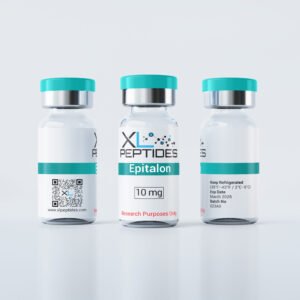
PEPTIDES
PEPTIDES
PEPTIDES
PEPTIDES
PEPTIDES
PEPTIDES
PEPTIDES
PEPTIDES
Reviews
There are no reviews yet.